
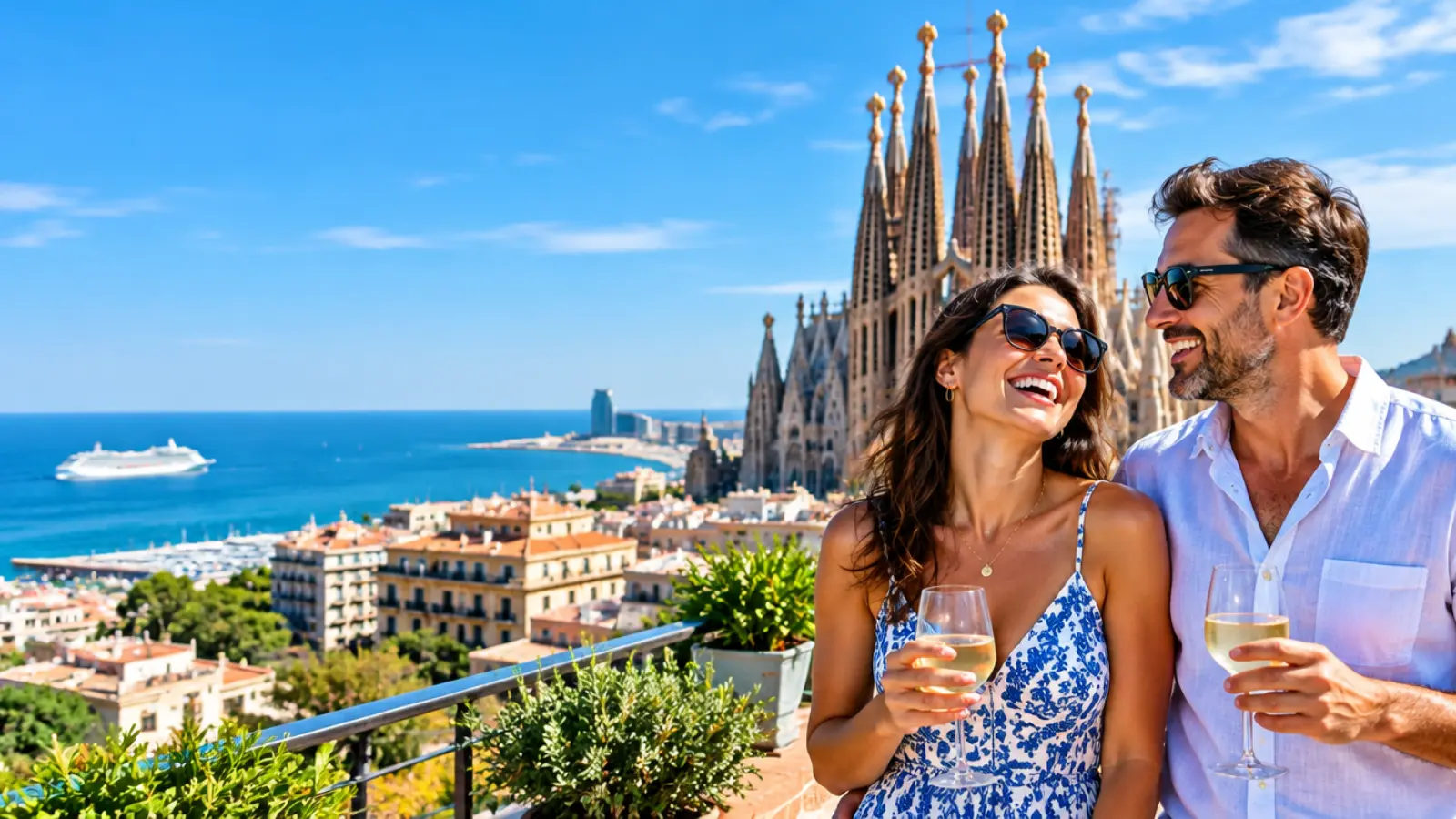
Gaudí, tapas and the Gothic Quarter, ten minutes from the gangway.
Barcelona is the busiest cruise port in Europe, and the ships tie up at the Moll Adossat terminals (A through E and the new MSC terminal H) on a breakwater about 2 miles from the foot of La Rambla. Most cruisers ride the port shuttle to the Columbus monument and spend the day between the Sagrada Família and the lanes of the Gothic Quarter. SmartCruiser lists every cruise that calls here from every line, priced with taxes, fees and port expenses included, with the sailings that carry SmartCruiser bonus onboard credit or instant savings at the top.
Three ways to do Barcelona
A Gaudí day with timed tickets, the old city on foot, or the hills and the beach: pick your style and the buttons filter the list of sailings below.
Sagrada Família, Casa Batlló and Park Güell
- Sagrada Família is timed entry, online only, about €26 basic as of 2026; book the slot before you sail, the day-of line does not exist
- Taxi from the terminal to the basilica is about €15 to €20 and 20 minutes outside rush hour; allow 90 minutes for the visit
- Add Casa Batlló on Passeig de Gràcia (from about €29) or Park Güell’s monumental zone (about €18, timed), but not both on an 8 hour call
Best for: first-timers, architecture and photo lovers
La Rambla, the Gothic Quarter and La Boqueria
- The port shuttle drops you at the World Trade Center, a 5 minute walk from the Columbus monument and the foot of La Rambla
- Wander up to La Boqueria market for jamón and fresh juice, then into the Barri Gòtic for the Cathedral, Plaça Reial and the Picasso Museum (about €14)
- Everything is flat and walkable; lunch of tapas and a glass of cava is about €20 to €30 a head off the main drag
Best for: couples, foodies, anyone who hates buses
Montjuïc views, Barceloneta sand and seafood
- Montjuïc rises directly behind the port: cable car or funicular to the castle, the MNAC museum and the Olympic stadium with the whole city below
- Barceloneta beach is about 15 minutes from the shuttle stop; rent a lounger, swim May to October, and eat paella on the boardwalk
- Finish with the Magic Fountain show at Plaça Espanya on sailaway-friendly evenings (seasonal, check the schedule)
Best for: repeat visitors, families, hot summer days
Barcelona cruises: SmartCruiser picks first
Every cruise that calls at Barcelona from every line, priced live with taxes, fees and port expenses included. The picks at the top are sailings where booking with SmartCruiser gets you something extra: instant savings or bonus onboard credit. Below them, every other sailing that stops here, with full sorting by home port, line, month, length and price.
SmartCruiser picks
Sorted by what you save, biggest firstEvery cruise that calls at Barcelona
Stack any filters, then pick a sortPrices are per person, double occupancy, in US dollars, and include cruise fare, taxes, fees and port expenses as published by the cruise line at the moment you load this page. Fares are capacity controlled and change daily; the fare is confirmed when you book. Flights, hotels and transfers are extra unless the line’s offer says otherwise. SmartCruiser instant savings and bonus onboard credit are provided by SmartCruiser on top of the cruise line’s price and are not available when booking direct; amounts are per stateroom, vary by stateroom category and are shown for the lowest category offered. Special SmartCruiser rates are pricing SmartCruiser holds on that sailing for its clients, with extra onboard credit; you book your own stateroom and travel on your own. Senior fares apply to guests 55 and over; resident fares need proof of residency in a listed state or province at check-in; police and fire fares apply to active or retired police, fire and EMT personnel with ID. Qualifier-fare savings are measured against the best fare the cruise line offers the general public for the same stateroom category on the day the list was pulled, updated weekly.
Home ports that sail to Barcelona
Barcelona is a port of call on Western Mediterranean loops from all over Europe; pick a home port and the list above filters to cruises leaving from there.
Things to do in Barcelona
Count on about 2.5 hours less than your docked time once you add the shuttle each way; here is where to spend the rest.
Which lines call at Barcelona?
Almost every line that sails the Mediterranean calls at Barcelona, and many also start cruises here; these are the ones with the most sailings.
When to go
Barcelona is mild year round with hot, crowded summers and short, rainy autumn spells; the sweet spots are late spring and early fall.
Barcelona questions we answer every day
Where do cruise ships dock in Barcelona, and how far is it to the city?
Big ships use the Moll Adossat terminals on a breakwater south of the old port: A, B and C (public), D and E (mostly Carnival Corporation brands) and MSC’s terminal H, opened in 2025. It is about 2 miles to the foot of La Rambla with no shade, so take the blue Cruise Bus (T3 Portbus, about €3.50 one way or €5 return, card payment) to the World Trade Center stop, or a taxi for about €15 to the Columbus monument or Plaça Catalunya including the port supplement. Only small ships use the World Trade Center piers at the city end.
How do I get around Barcelona?
On foot and by metro. The Drassanes stop (L3, green line) is a 10 minute walk from the shuttle drop and reaches Plaça Catalunya, Passeig de Gràcia and (with one change) the Sagrada Família. A single ticket is about €2.65 and a T-casual 10-ride card about €12.50 as of 2026. Taxis are black and yellow, metered and honest; the hop-on hop-off bus is about €30 for the day.
What money do I use, and will my phone work?
Spain uses the euro and almost everything takes cards and tap-to-pay; carry a little cash for market stalls. Spanish and Catalan are the languages and English is fine anywhere tourists go. Barcelona is on Central European Time, six hours ahead of New York. Most US carriers sell a daily international pass of about $10 to $12, or buy an eSIM before you sail; the city has good free Wi-Fi.
Is Barcelona safe for cruise passengers?
Violent crime is rare, but Barcelona is Europe’s pickpocket capital and the cruise lines and the U.S. State Department both say so. La Rambla, the metro and the beach are the hot spots: wear a cross-body bag in front, leave the passport in the cabin safe (carry a photo of it and your ship card), and ignore anyone asking you to sign a petition. Stay in the tourist districts, use the metered taxis and you will have no trouble.
What is the best excursion, and should I book it through the ship?
The Sagrada Família is the must, and here the ship excursion earns its price: the lines hold timed-entry blocks that are gone online months ahead in summer, and a guide gets you through the facade story in half the time. If you already hold your own timed ticket, do Gaudí by taxi and the old city on foot and skip the bus. Book through the ship if your call is short (under 8 hours) or if you want Montserrat, which is a 4 hour round trip on its own.
Do I need a passport for a Mediterranean cruise?
Yes. Every Mediterranean cruise needs a passport valid for at least three months beyond your return (we recommend six), and there is no closed-loop exception as there is for round trips from US ports. The EU’s new entry-exit system records your arrival at the first Schengen port, and the ETIAS travel authorization is being phased in; check the EU’s official site before you fly. Our specialists keep a current checklist for every sailing.
Are taxes and fees included in the prices here?
Yes. Every price on this page includes the cruise fare, government taxes, fees and port expenses, so the number you see is the number you pay for the cruise. Flights, hotels, shore excursions and onboard gratuities are extra, and SmartCruiser adds bonus onboard credit on the picks at the top that you cannot get booking direct.
Talk to a Barcelona cruise specialist
Tell us your dates and how many days you want in Barcelona and we will find the Mediterranean sailing with the most SmartCruiser value, then book it for you. Monday to Thursday 9 to 6, Friday 9 to 5, Saturday 10 to 6 ET.