
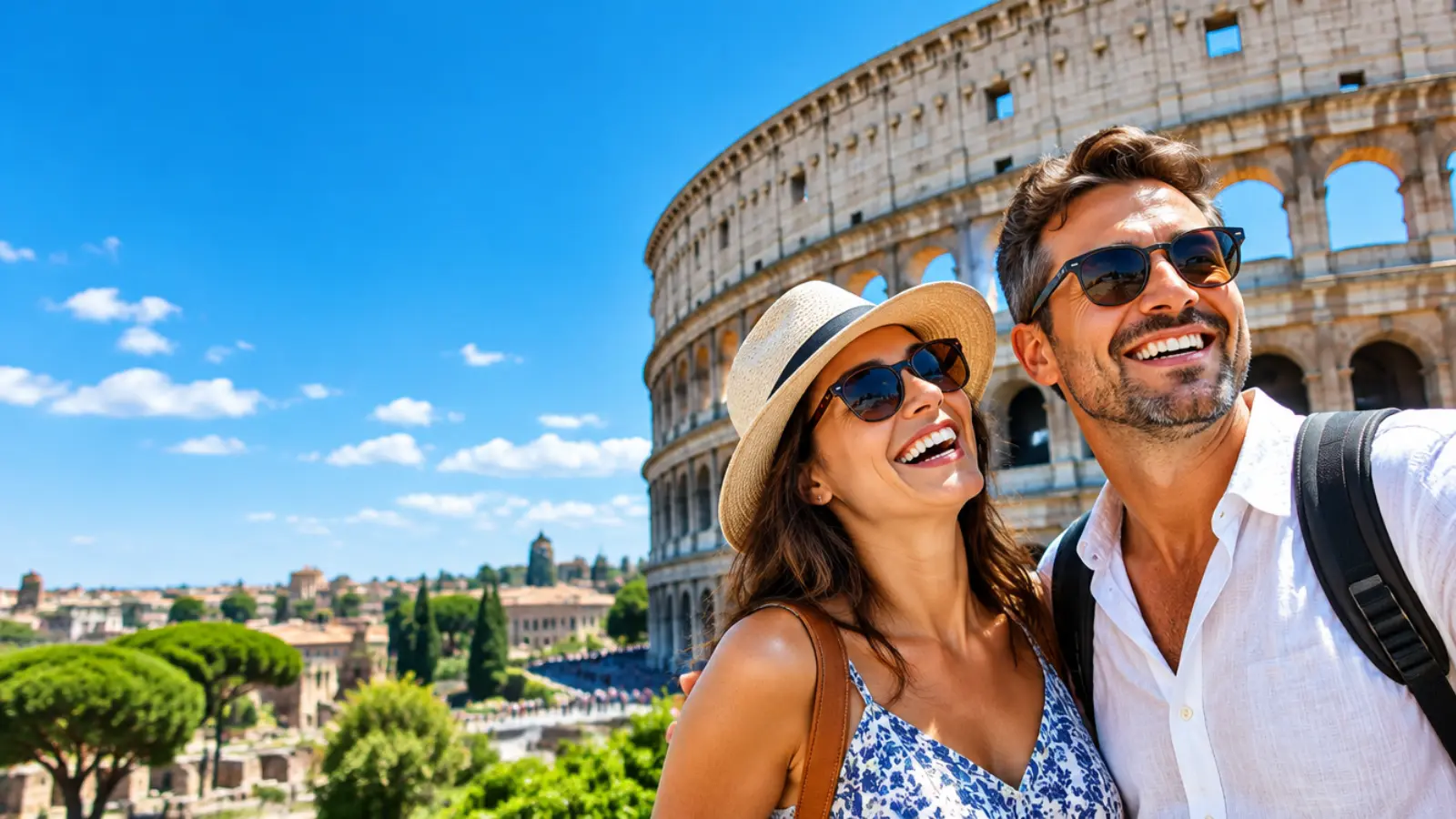
The Vatican, the Colosseum and cacio e pepe, one train from the pier.
Civitavecchia is Rome’s cruise port, a working harbor about 45 miles northwest of the city with a dozen cruise berths behind the walls of Michelangelo’s fort. A free shuttle runs from the ship to the port gate at Largo della Pace, and from there a 20 minute walk or a short bus puts you on the train to Rome St. Peter’s in about 50 minutes. SmartCruiser lists every cruise that calls here from every line, priced with taxes, fees and port expenses included, with the sailings that carry SmartCruiser bonus onboard credit or instant savings at the top.
Three ways to do Rome from Civitavecchia
Rome on your own by train, a guided ship excursion that handles the timed tickets, or an easy day near the port: pick one and the buttons filter the list of sailings below.
The FL5 train to St. Peter’s
- Free port shuttle to Largo della Pace, then walk 20 minutes along the seafront (or the €6 station shuttle) to Civitavecchia station
- Regional trains every 30 minutes: about €4.60 to Roma San Pietro in 50 to 60 minutes, €5 to Termini in 75 to 85 minutes; the BIRG day ticket (about €14) covers the round trip plus Rome metro and buses
- Only sensible on a call of 10 hours or more: an 8 hour call leaves you about 3 hours in the city, a 10 hour call about 5
Best for: independent travelers, repeat visitors, long port days
Vatican and Colosseum by ship excursion
- The lines run 9 to 10 hour coach tours with reserved Vatican Museums or Colosseum entry, about $125 to $250 per person depending on how much is guided
- You see the Sistine Chapel, St. Peter’s, the Trevi Fountain and the Pantheon with no ticket stress and a guaranteed ride back to the ship
- Rome On Your Own coaches (about $125) just give you the bus both ways and 5 to 6 hours loose in the center
Best for: first-timers, anyone nervous about timing, families
Civitavecchia, Tarquinia and the Etruscan coast
- Walk Forte Michelangelo, the seafront promenade and the morning market, then lunch on fresh fish in the Ghetto quarter for about €25
- Tarquinia is 12 minutes by train: painted Etruscan tombs and the National Etruscan Museum, about €13 combined
- The Terme Taurine Roman baths are a €8 taxi ride inland; back on board for a late lunch while everyone else is on a coach
Best for: anyone who has done Rome, short calls, a rest day
Rome (Civitavecchia) cruises: SmartCruiser picks first
Every cruise that calls at Civitavecchia from every line, priced live with taxes, fees and port expenses included. The picks at the top are sailings where booking with SmartCruiser gets you something extra: instant savings or bonus onboard credit. Below them, every other sailing that stops here, with full sorting by home port, line, month, length and price.
SmartCruiser picks
Sorted by what you save, biggest firstEvery cruise that calls at Rome (Civitavecchia)
Stack any filters, then pick a sortPrices are per person, double occupancy, in US dollars, and include cruise fare, taxes, fees and port expenses as published by the cruise line at the moment you load this page. Fares are capacity controlled and change daily; the fare is confirmed when you book. Flights, hotels and transfers are extra unless the line’s offer says otherwise. SmartCruiser instant savings and bonus onboard credit are provided by SmartCruiser on top of the cruise line’s price and are not available when booking direct; amounts are per stateroom, vary by stateroom category and are shown for the lowest category offered. Special SmartCruiser rates are pricing SmartCruiser holds on that sailing for its clients, with extra onboard credit; you book your own stateroom and travel on your own. Senior fares apply to guests 55 and over; resident fares need proof of residency in a listed state or province at check-in; police and fire fares apply to active or retired police, fire and EMT personnel with ID. Qualifier-fare savings are measured against the best fare the cruise line offers the general public for the same stateroom category on the day the list was pulled, updated weekly.
Home ports that sail to Rome
Civitavecchia is a port of call on loops from all over the Mediterranean; pick a home port and the list above filters to cruises leaving from there.
Things to do from Civitavecchia
Budget about an hour each way from gangway to Rome and a 60 to 90 minute safety margin on the return; here is what fits.
Which lines call at Rome (Civitavecchia)?
Civitavecchia is a turnaround port for most lines and a port of call for the rest; these are the ones with the most sailings.
When to go
Rome is a shoulder-season city: spring and fall are warm and bright, July and August are hot and packed, and winter is mild with the shortest lines of the year.
Rome (Civitavecchia) questions we answer every day
Where do cruise ships dock, and how far is Rome?
Ships dock at Civitavecchia’s cruise berths, about 45 miles northwest of Rome; there is no tendering. A free Port Mobility shuttle runs every 20 minutes from each berth to Largo della Pace at the port gate, a 10 to 15 minute ride. Rome itself is 50 to 60 minutes by regional train to Roma San Pietro or 75 to 85 minutes to Termini, and 75 to 90 minutes by coach or car depending on traffic. Plan on about 2 hours of transit each way from gangway to the sights.
How do I get to the train station and what does it cost?
From Largo della Pace it is a flat 20 minute walk south along the seafront to Civitavecchia station, or a paid station shuttle at about €6 each way, or a taxi. Regional FL5 trains run about every 30 minutes; a single ticket is about €4.60 to Roma San Pietro, Trastevere or Ostiense and €5 to Termini as of 2026, and the BIRG day ticket (about €14, sold at the counter or tobacconist, not online) covers the round trip plus Rome’s metro, buses and trams. Stamp regional tickets at the platform machines before boarding.
What money do I use, and will my phone work?
Italy uses the euro and cards work almost everywhere, though small bars and the ticket window may prefer cash. Italian is the language and English is easy in Rome and at the port. Rome is on Central European Time, six hours ahead of New York. Most US carriers sell a daily international pass of about $10 to $12, or buy an eSIM before you sail.
Is Rome safe for cruise passengers?
Rome is safe in the way big European capitals are: violent crime is rare, pickpockets are not. The cruise lines and the U.S. State Department both flag Termini station, the metro, the Trevi crowds and the bus 64 to the Vatican. Keep your bag in front, leave the passport in the cabin safe with a photo of it on your phone, use the white licensed taxis with meters, and ignore anyone offering to skip the line at the Colosseum.
What is the best excursion, and should I book it through the ship?
If it is your first time, book the ship’s Vatican or Colosseum tour: the reserved entries alone are worth it in high season, and the ship will not leave without its own coach. If you have done Rome, the train is cheap and easy on a call of 10 hours or more; just be at the station for a train that lands you back in Civitavecchia at least 90 minutes before all-aboard, and know that the last FL5 of the afternoon can be standing room only.
Do I need a passport for a Mediterranean cruise?
Yes. Every Mediterranean cruise needs a passport valid for at least three months beyond your return (we recommend six), and there is no closed-loop exception as there is for round trips from US ports. The EU’s new entry-exit system records your arrival at the first Schengen port, and the ETIAS travel authorization is being phased in; check the EU’s official site before you fly. Our specialists keep a current checklist for every sailing.
Are taxes and fees included in the prices here?
Yes. Every price on this page includes the cruise fare, government taxes, fees and port expenses, so the number you see is the number you pay for the cruise. Flights, hotels, shore excursions and onboard gratuities are extra, and SmartCruiser adds bonus onboard credit on the picks at the top that you cannot get booking direct.
Talk to a Rome cruise specialist
Tell us your dates and whether you want Rome as a stop or a start and we will find the Mediterranean sailing with the most SmartCruiser value, then book it for you. Monday to Thursday 9 to 6, Friday 9 to 5, Saturday 10 to 6 ET.